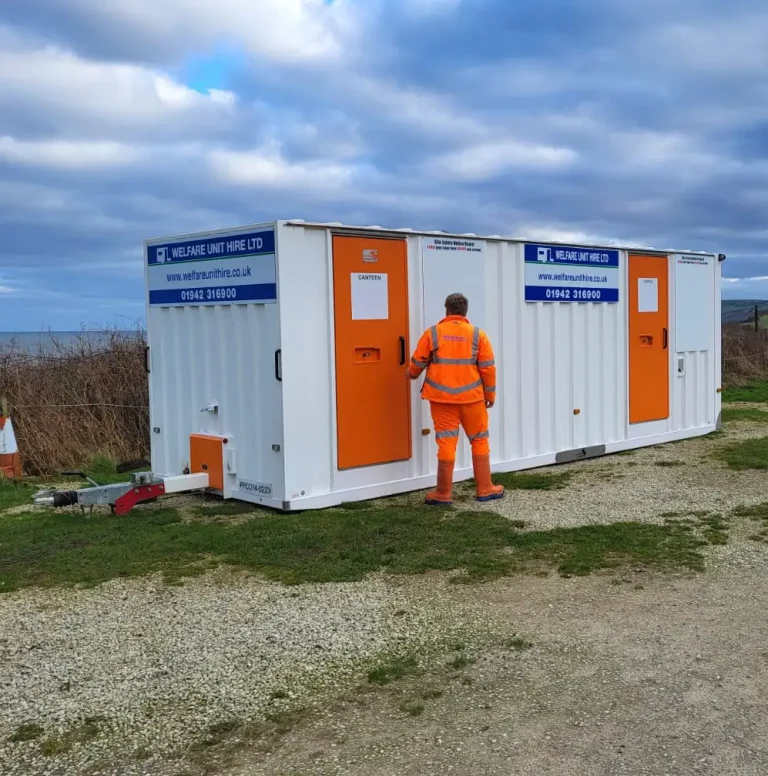
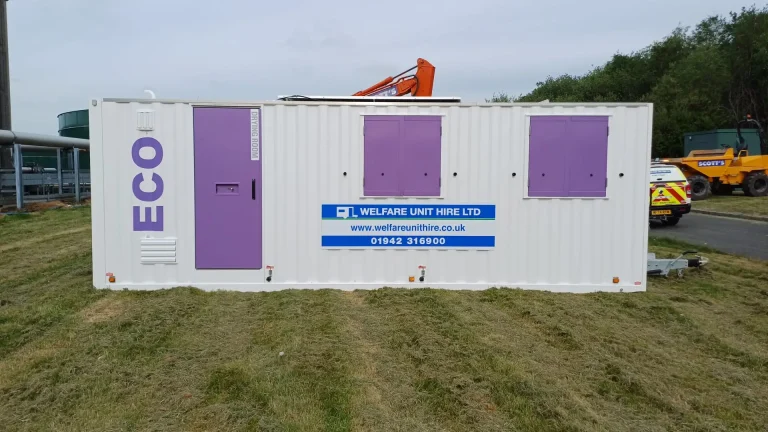
How hybrid power works on a Planet Power welfare unit
Every unit in the Planet Power range runs on a hybrid system. Roof-mounted solar panels charge a battery bank through the day, and a small diesel generator sits in reserve for when the battery runs low or the weather does not play ball. On a typical summer day, with well over ten hours of daylight, the solar array can cover most or all of the unit’s running load. The generator only steps in to top the battery back up, and on a good week it might not run at all.
Across the day, solar and battery power covers:
- Lighting throughout the canteen, drying area and toilets
- 240v sockets for chargers, radios and small power tools
- The water heater, so hot water for washing is available without the generator running
- The fridge, kept running overnight on battery alone
- Canteen appliances, including the kettle and microwave at peak times
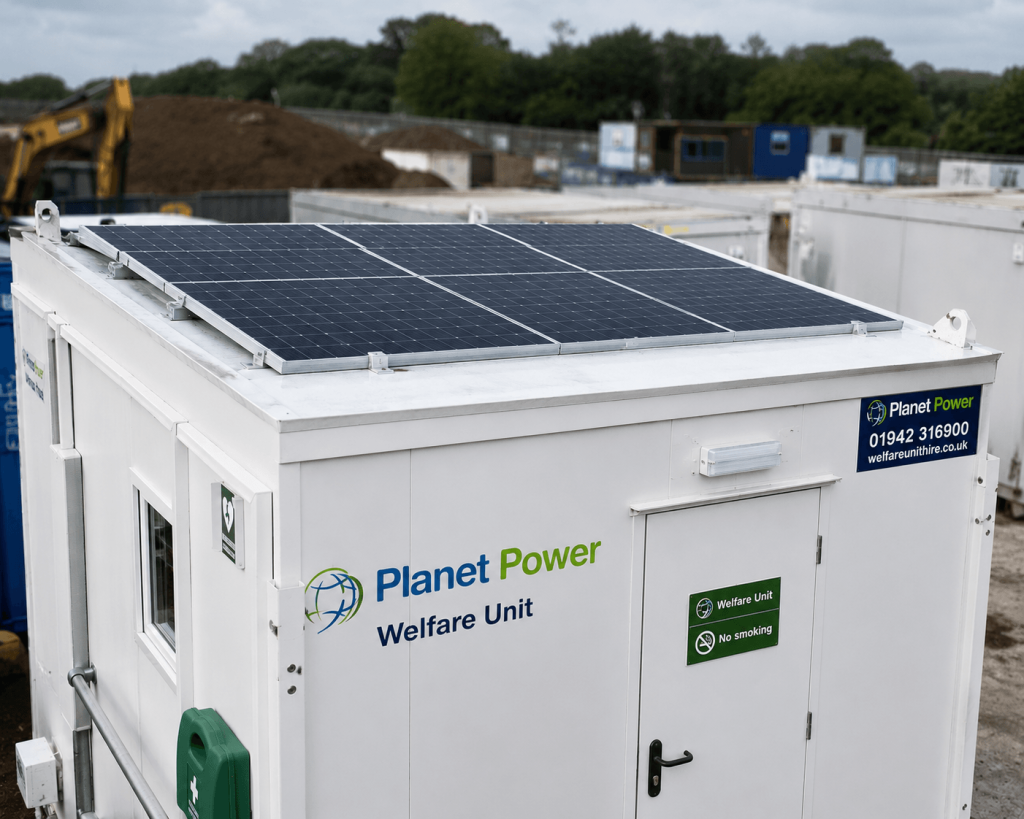 NOTE: Image is for illustration purpose only
Solar powered welfare unit fuel and CO₂ savings explained
Across the Planet Power range, the solar and battery set-up makes the units up to 75% cheaper to run than a standard generator-only welfare unit, with an auto-shut-off system that stops the generator running once the battery is topped up. On a diesel-only unit, the generator can be running for most of the working day. On a Planet Power unit through summer, it might only need an hour or two or not run at all on a sunny day.
A 75% cut in generator runtime means a 75% cut in the diesel burned for welfare power. Using the UK Government’s greenhouse gas reporting conversion factors, which put diesel at roughly 2.68kg of CO₂ for every litre burned, that saving applies to every litre avoided, week after week, for the life of the hire. Across a six month contract, the diesel avoided on welfare power alone can add up to a meaningful tonnage of CO₂. Every Planet Power unit is also HVO compatible, so if the generator does need to run, it can run on a lower carbon fuel.
The saving shows up directly in running costs too. Less diesel delivered to site means fewer fuel call-outs, less risk of a generator running dry overnight, and one less thing for the site manager to plan around on a job that is already moving fast.
Why this matters for PAS 2080 and tender scoring
More public sector and tier one contracts now score bids against PAS 2080, the carbon management standard for infrastructure projects. Welfare provision sits inside Scope 3, the emissions a contractor is responsible for through its supply chain, including hired plant and equipment. A diesel-hungry welfare cabin running through a multi-month contract adds up, and it is one of the easier figures for an assessor to query because it is simple to measure: fuel delivered against fuel burned.
Choosing a solar powered welfare unit gives your bid team a concrete, documented reduction to put against that line. The sustainability spec sheet for the Planet Power range sets out panel output, battery capacity and typical generator runtime, so the numbers are ready at submission rather than chased down at the last minute.
Which Planet Power model fits your site
The Planet Power 6 suits crews of up to six and is the easiest unit to move between phases on a linear job. The Planet Power 8RD steps up to eight people and adds a dedicated rear drying room, useful for crews working in wet ground conditions even in summer. The Planet Power 10 handles larger crews and longer-running projects where a site office sits alongside the welfare space. All three run on the same hybrid solar and back-up generator set-up, so the up to 75% running cost saving applies whichever size you choose. The full range, with floor plans, is on the Our Products page.
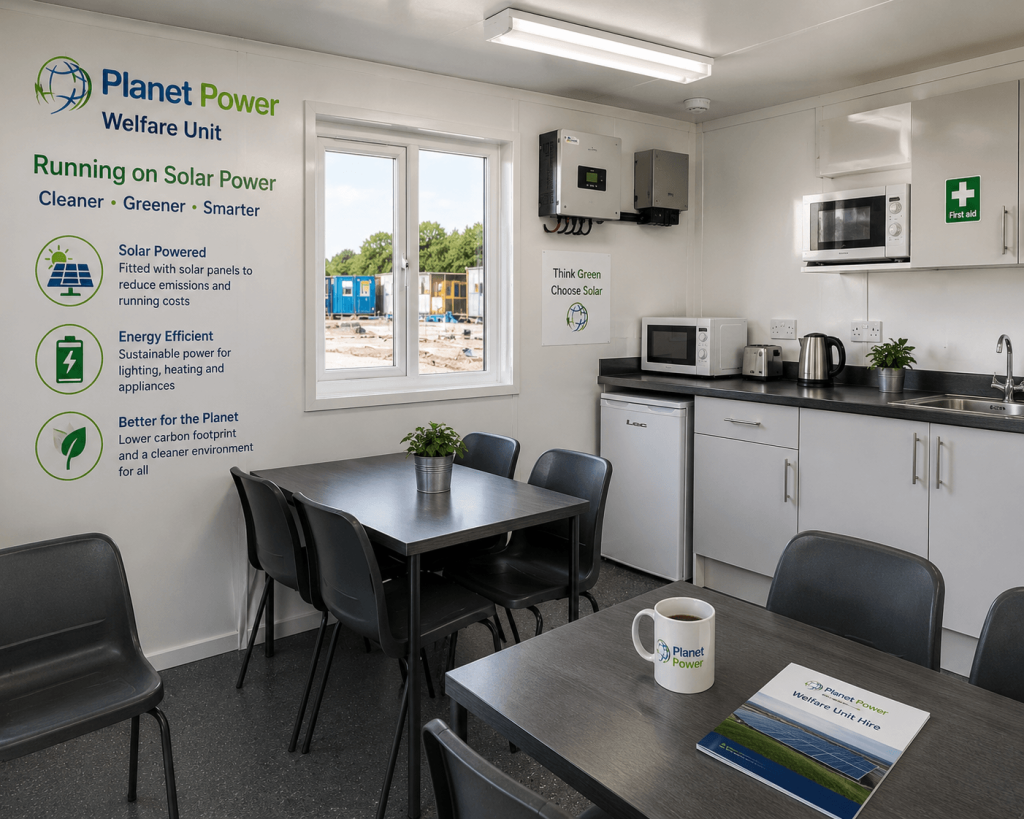 NOTE: Image is for illustration purpose only
Hybrid welfare across the North West this summer
Welfare Unit Hire runs from Wigan, with the M6, M62, M60, M58, M65 and M61 all close by. Sites across Manchester, Liverpool, Preston, Warrington, Bolton and St Helens can have a hybrid Planet Power unit on the ground within 24 hours. Summer is the strongest time of year for solar output in the North West, so a unit ordered now will be running mostly on solar from day one, with servicing handled in-house on the same schedule as the rest of the fleet.
If your project is tendering against sustainability criteria, or you simply want to cut the fuel bill on a long-running job, summer is the right time to make the switch.