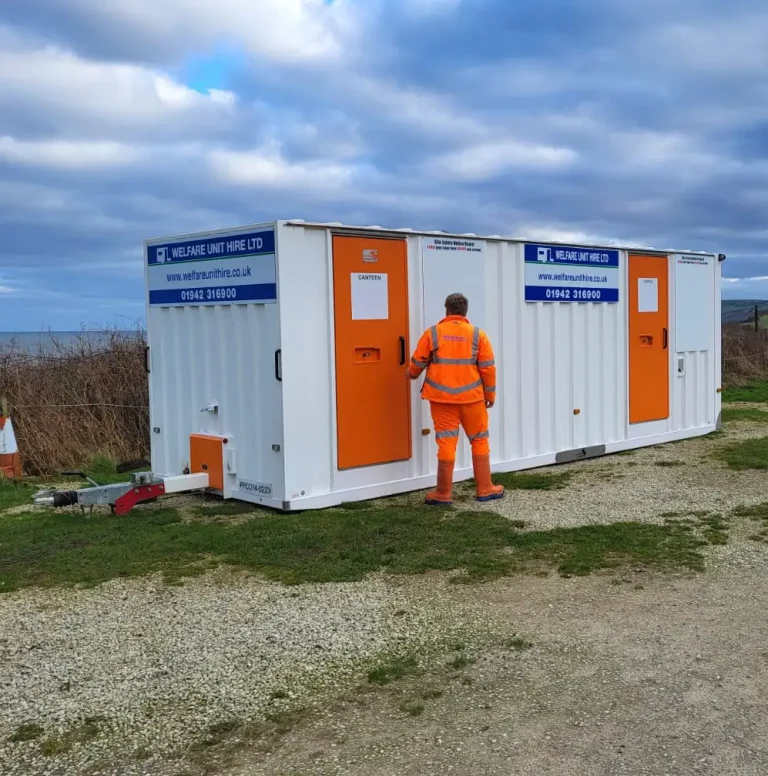
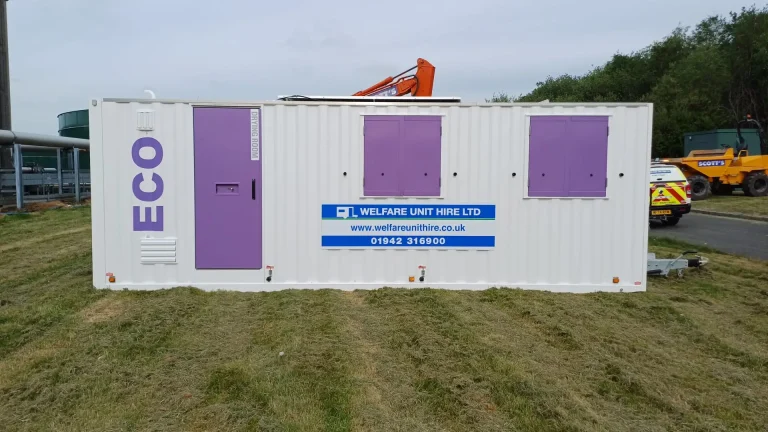
A plain cost comparison for contractors deciding between owning a welfare unit and hiring one for the length of the job.
Every contractor who hires a welfare unit more than a couple of times a year ends up asking the same question: would it be cheaper to just buy one? To compare welfare unit hire cost against ownership properly, you need to count the money that leaves the business after the unit arrives, not just on the day it does. Depreciation, servicing, repairs, transport, storage and compliance testing all sit on the ownership side, and they are easy to underestimate when you are looking at a weekly hire rate.
This guide puts both options side by side, using the Wigan based Planet Power fleet as the reference point, so you know which column your next project falls into.
What buying a welfare unit really costs
The purchase price is the number everyone remembers. For a new solar hybrid unit in the class of the Planet Power 6 or Planet Power 8RD that is a serious five figure outlay, with canteen office units costing more again. It is only the opening entry, though. The costs that follow decide whether ownership adds up.
Depreciation
A unit that lives outdoors and gets towed between sites loses resale value every year, whatever the condition.
Toilet servicing
Someone has to empty the waste tank, refill the fresh water and sanitise the cubicle every week, either with your own labour and tanker or through a separate contract.
Repairs and breakdowns
Generators, water pumps, heaters and batteries all fail eventually. When your own unit goes down, the crew has no welfare until it is fixed, which puts you in breach of your HSE welfare duties on day one.
Transport
Moving the unit to site, between phases and back to the yard needs a tow vehicle, a qualified driver and time.
Compliance testing
Electrical inspection, alarm testing and trailer roadworthiness all need doing and recording for any site audit.
Storage between jobs
An idle unit takes up yard space and needs recommissioning after a winter stood still.
Add those together across a typical three to five year ownership window and the cost of a welfare unit is often double the price you paid for it.
What welfare unit hire cost actually includes
A weekly hire rate looks like a simple number, but with the right supplier it bundles in most of the list above. With Welfare Unit Hire, the rate covers delivery to your North West site within 24 hours, scheduled toilet servicing by an in-house team accredited by Portable Sanitation Europe, and breakdown cover with field engineers who are never far from the job. You can see the full picture of what sits behind each hire on the Our Services page.
Welfare unit hire prices in the UK vary with the size of unit and the length of the hire, so a compact six person towable unit for a fortnight will cost a lot less than a twin toilet canteen office for a six month scheme. What stays the same is the structure: one predictable weekly figure that is easy to price into a tender and recharge to the client, with no capital tied up and no surprise repair bills.
Here is how the two options compare line by line.
| Cost line | Buying a welfare unit | Hiring from Welfare Unit Hire |
|---|---|---|
| Upfront outlay | Full purchase price, paid before the unit earns anything | None, you pay for the weeks you use |
| Depreciation | Carried by you, year on year | Not your problem |
| Toilet servicing | Own tanker and labour, or a separate contract | Included, weekly, by the in-house team |
| Repairs and breakdowns | Your cost and your downtime | Included, with a replacement unit if needed |
| Transport to site | Your tow vehicle, driver and time | Included, delivered within 24 hours |
| Compliance testing | Arranged and recorded by you | Done before the unit leaves the depot |
| Storage between jobs | Yard space and recommissioning | None, the unit goes back |
| Fuel and running costs | Depends on the unit you buy | Solar hybrid, up to 75% cheaper to run than a generator unit |
Want a number for your project window?
Tell us the crew size, the site postcode and the start and finish dates and we will send a no-obligation hire quote the same day.
Use the enquiry formor call 01942 316900When hire is the right call
For most small and medium contractors, hire wins on both cost and risk. If your work comes in projects of a few weeks to several months, with gaps between them, an owned unit spends too much of the year sitting in the yard while its value falls. Hire also flexes with the job. A groundworks phase in Preston might need a Planet Power 6, while the next scheme in Manchester needs a ten person canteen office. Hiring lets you match the unit to the crew every time, rather than making one owned cabin fit every job. Our welfare unit size guide walks through how to pick the right one.
Hire is also the safer route for compliance. Servicing, inspection and breakdown cover are the supplier’s responsibility and are recorded as part of the service, so the paperwork is there when a principal contractor asks for it.
When buying starts to make sense
Ownership can add up for a contractor with a unit in use for most of the year on long, stable contracts, yard space to store and maintain it, and staff who can take on servicing and transport. Even then, the case is stronger for one unit than for a fleet. Own three or four and you are also running a tanker, a workshop and a compliance diary, which is a welfare hire business of your own alongside the one you set out to run.
THE 40 WEEK TEST
A useful test is utilisation. If the unit would be on site for fewer than around 40 weeks a year, hire is almost always cheaper once servicing, repairs and depreciation are counted. Above that, compare a purchase quote and a hire quote over a realistic five year period, including resale value.
Running costs matter whichever way you go
One cost line often gets missed: what the unit costs to run every week it is on site. A diesel generator cabin burns fuel all day for the kettle, heater and lights. A solar hybrid unit from the Planet Power range runs on solar for most of the day and only calls on its small back-up generator when it has to, which is why it is up to 75% cheaper to run. Over a long hire that alone can outweigh any gap in the weekly rate. We covered the numbers in our piece on how hybrid power cuts site fuel costs and carbon.
Hire vs buy for North West contractors
Geography tips the balance too. Welfare Unit Hire works from a single depot in Wigan and deliberately covers only the North West, from Birmingham up to Carlisle, with the M6, M62, M60, M61, M58 and M65 close by. A unit can be on the ground in Liverpool, Warrington, St Helens or Bolton within 24 hours, the servicing tanker runs a regular local round, and a field engineer can be on site the same day if anything goes wrong. Those are the parts of ownership that cost the most to replicate yourself, and they come as standard. Read more on the Why Choose Us page.
If you are weighing up the cost of a welfare unit for a project in the region, get a hire quote for the exact dates and put it next to your ownership numbers. In most cases the hire column is shorter, and it stays shorter once the job is finished.
Get a no-obligation hire quote for your project window
Send us your crew size, site location and dates and we will recommend the right unit and price it for the full hire period.
Fill in the enquiry formor call 01942 316900 and one of the team will come back to you todayWelfare unit hire cost: common questions
How much does welfare unit hire cost in the UK?
It depends on the size of the unit and the length of the hire. A compact six person unit on a short hire costs far less per week than a twin toilet canteen office on a long scheme. With Welfare Unit Hire the weekly rate includes delivery, scheduled toilet servicing and breakdown cover, so the figure you are quoted is the figure you pay.
Is it cheaper to buy a welfare unit than to hire one?
Only when the unit is in use for most of the year and you already have the yard space, tanker and staff to service, transport and test it. For contractors working project to project, hire is usually cheaper once depreciation, servicing and repairs are counted.
What is included in the weekly hire rate?
Delivery to site within 24 hours across the North West, weekly toilet servicing by an accredited in-house team, electrical and safety checks before dispatch, and breakdown cover with local field engineers. Fuel use is low because every unit in the range is solar hybrid.