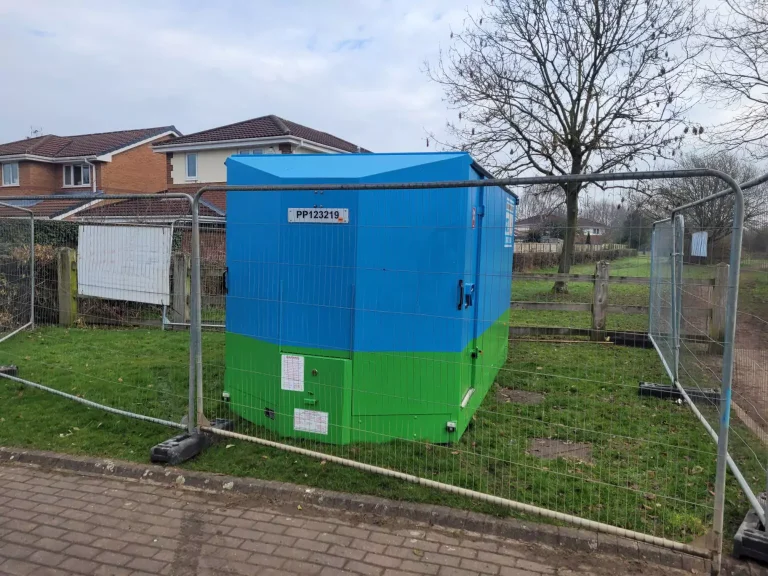
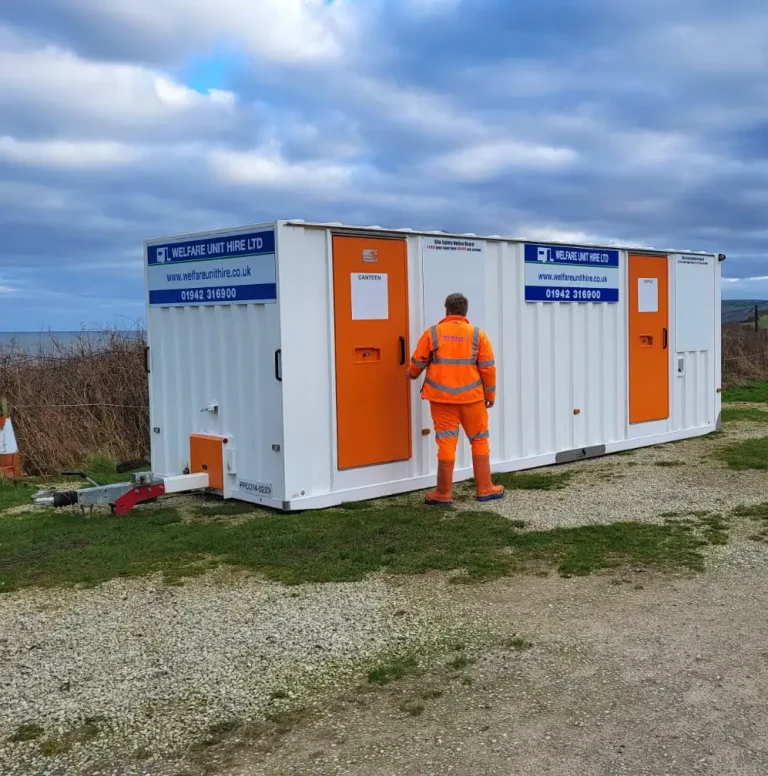
The clocks went back on Sunday. From here until March your crew will start work in the dark, finish in the dark and spend a good share of the hours in between wet. Winter site welfare is not a comfort extra. It is the difference between a gang that is productive by half seven and one that is still thawing out at nine.
Here is what good provision looks like through the cold months, what HSE expects, and how to get it booked before everyone else does.
AT A GLANCE
✓ Cold, wet crews lose hours to slow starts, long breaks and sick days
✓ HSE expects heated rest space, hot water and somewhere wet kit can actually dry
✓ Every Planet Power unit has a heated drying room with a hot drying shelf
✓ Solar hybrid power keeps the cabin warm without the generator running all day
✓ The fleet is largely committed by mid December, so book winter welfare now
The real cost of a cold, wet crew
Cold hands lose dexterity. Wet boots slow people down. A crew that has nowhere warm to eat takes longer breaks, more often, and comes back less sharp than it left. None of this shows up as a line on the programme, but every site manager who has run a job through January knows how much time it eats.
Then there is sickness. Operatives who go home in damp kit and come back in damp kit pick up more colds, chest infections and days off. On a crew of eight, two people off for a week in February is a quarter of your labour gone at the point when daylight is shortest and the programme is tightest. Winter construction welfare that keeps people warm and dry is one of the few things on site that pays for itself in hours alone.
What HSE actually expects when the weather turns
The welfare requirements do not change with the season, but winter is when they get tested. Under CDM 2015 Schedule 2, every site needs a rest area that is heated, a means of boiling water and warming food, hot and cold running water for washing, and facilities for drying wet clothing. Our guide to HSE welfare requirements on construction sites covers each duty in detail, and our shorter piece on the five welfare facility requirements is a useful checklist.
The drying requirement is the one most often fudged. A couple of hooks in a cold container does not count. HSE expects somewhere wet clothing can actually dry between shifts, which in practice means a heated space with airflow.
A couple of hooks in a cold container is not a drying facility. HSE expects heat and airflow.
Drying rooms: the difference between dry kit and damp kit

Every unit in the Planet Power range has a dedicated drying room with its own external door, so wet gear never has to come through the canteen. Inside there is a hot drying shelf mounted above the generator, so the heat the generator produces anyway goes into drying boots and gloves rather than out of a vent. A wall heater, a boot and glove rack and coat hooks complete the set up. Kit hung up at four in the afternoon is dry by seven the next morning.
On bigger sites, or where a large gang is working in persistently wet conditions, a standalone drying room earns its place alongside the welfare unit. Our Mobile Tool Store and Drying Room is built on the Planet Power 6 body, is ply lined to keep condensation down, and in drying room configuration runs two 2kW heaters from your generator or external power. Because it lowers itself to the ground on its own hydraulics, it goes wherever the welfare unit goes without a lift plan. Searches for drying room hire climb every November for a reason.
Heating a site cabin without burning diesel all day
Winter is when welfare units cost the most to run, because the heaters are on from first light and the days are too short for solar to carry much of the load. This is where the power system design matters.
Planet Power units are solar hybrid. The roof panels charge a battery bank that runs the lights, phone charging and the rest area heaters, so the space your crew sits in is warm without the generator turning over. The generator handles the heavy loads, including the kettle, microwave, hot water and the drying room heater, and then shuts itself off automatically rather than idling. In short winter days the generator will run more than it does in June, but it still runs far less than on a generator only cabin, which is where the up to 75% running cost saving comes from. Our post on how hybrid power cuts site fuel costs explains the system, and every unit is HVO compatible if your project is reporting on carbon.
Fuel is supplied for the hire period, so you are not sending someone to the forecourt with jerry cans in the sleet.
Hot water and a proper brew
It sounds minor until you have gone without it. Every unit has a hot wash sink in the toilet and another in the rest area, a kettle and a microwave. A crew that can wash in warm water, heat a meal and sit down with a hot drink out of the wind comes back to work faster and in a better frame of mind. It also keeps you on the right side of the hot and cold water duty without a separate boiler on site.
Pick a unit with room to sit down

In summer half the crew eats outside. In winter everyone is inside at once, so a unit that was fine for eight in July can feel cramped in January. If your gang is at the top end of a unit’s capacity, consider going one size up for the winter hire. The Planet Power 8RD adds a larger drying room over the Planet Power 6. The 8 Welfare Office and Canteen Office 12 give the site manager a desk out of the rest area, so paperwork does not compete with lunch. Our welfare unit size guide sets out capacities side by side.
Tight site with nowhere for a bigger unit? Our small welfare unit hire range covers crews of four to eight without giving up the drying room or the heating.
Winter welfare, booked in one call
Tell us your crew size, postcode and start date and we will recommend the right unit and a delivery slot.
Send your detailsCall 01942 316900A winter welfare checklist for site managers
WINTER WELFARE CHECKLIST
✓Rest area heating working on battery as well as generator, so the cabin is warm before the generator starts.
✓Drying room or drying facility with heat and airflow, not just hooks.
✓Hot water at every wash point and a working kettle and microwave.
✓Fuel plan agreed: who fills, how often, and what the reserve is.
✓Toilet servicing schedule confirmed in writing, including over the Christmas shutdown if the unit stays on site.
✓Lighting checked, because your crew will arrive and leave in the dark.
✓Carbon monoxide and smoke alarms tested. Every Planet Power unit has both fitted and the service record is mounted on the frame.
✓Unit sized for everyone to sit inside at once.
Book before the December rush
Demand for welfare units across Greater Manchester, Merseyside and Lancashire climbs through November as winter programmes start and contractors who have been getting by with a cold container finally give in. By the second week of December the fleet is largely committed until the new year. If your site is in Wigan, Manchester, Liverpool, Warrington, Preston or anywhere in between, we can usually deliver within 24 hours of a confirmed order, but the choice of unit narrows the longer you leave it.
If you are weighing up a short winter hire against buying a cabin, our hire vs buying comparison runs the numbers. For most contractors with a seasonal need, hire wins on cost and on not having a cabin to store, service and test for the other eight months of the year.
Get your winter welfare booked before the December rush
One call and we will hold a unit for your start date. Delivered from Wigan, serviced by our own team, fuelled for the hire.
Make an enquiryCall 01942 316900