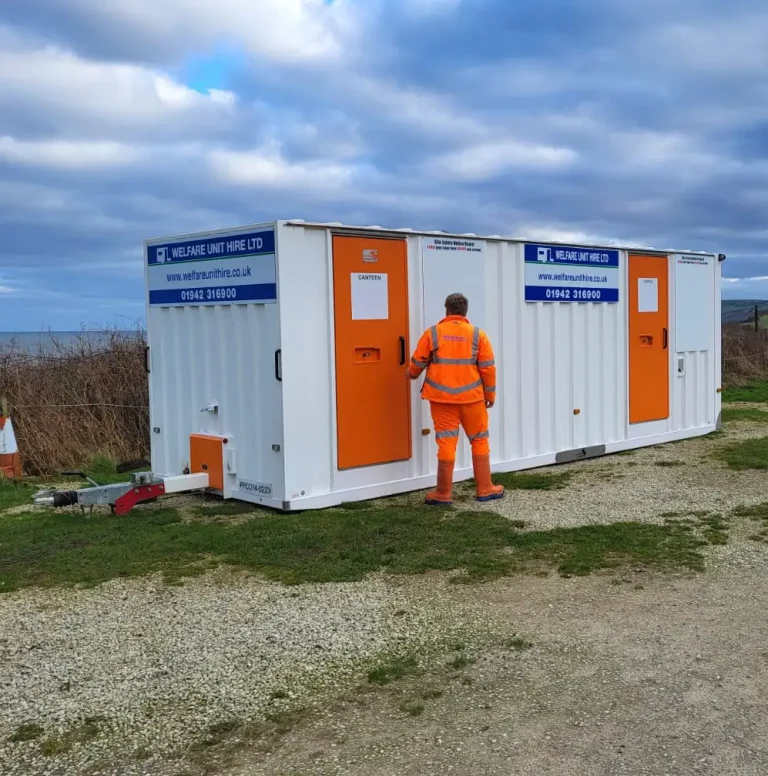
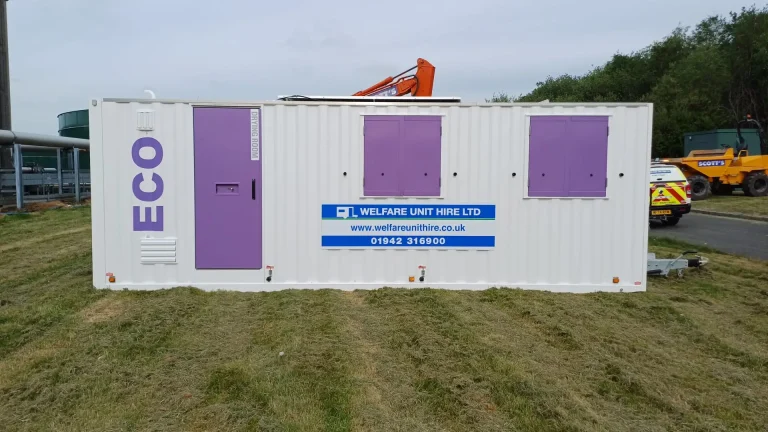
With energy prices and carbon regulations rising, many site managers are wondering if it’s worth turning to a solar powered welfare unit. But is the hire charge worth it in the long run? And how much can you actually save compared to traditional diesel powered units?
In this blog, we’ll break down everything you need to know about the cost of hiring and running a solar powered welfare unit, explore the hidden savings, and help you decide whether it’s the right move for your site. Let’s get into it.
What Affects the Cost of a Solar Powered Welfare Unit?
The cost of hiring a solar powered welfare unit can vary based on several factors.
- Unit size and type: A compact towable unit will usually cost less to hire than a larger static welfare cabin with canteen and toilet facilities.
- Additional cost factors: Hire duration, site location, and the amount of direct sunlight (solar gain) can all influence pricing.
- Long term value: For extended projects, the savings from reduced fuel use and maintenance quickly outweigh the higher initial hire cost – particularly as fuel prices continue to fluctuate.
Diesel vs Solar: The Long Term Running Cost Comparison
Traditional welfare units rely heavily on diesel generators. These are noisy, expensive to run, and require frequent refuelling and servicing.
Solar powered welfare units reduce this reliance dramatically. They use photovoltaic panels and battery storage to power lights, heating, water pumps, and sockets during daylight hours and beyond. That means significantly reduced fuel bills, especially on remote or unmanned sites.
A solar hybrid welfare unit could cut fuel use by 60–80%, depending on the season and usage. Fewer fuel deliveries also mean lower carbon emissions and less site disruption.
Do Solar Welfare Units Require More Maintenance?
One common misconception is that solar units are more complicated to maintain. In fact, the opposite is often true. Because there’s less wear and tear on generators, maintenance requirements are reduced. Fewer moving parts mean fewer breakdowns, which saves both time and money.
At Welfare Unit Hire, every solar welfare unit is maintained and inspected regularly to ensure reliable performance.
Are There Environmental Cost Benefits?
Yes, solar powered welfare units help reduce your Scope 1 emissions, which many firms now report as part of their ESG requirements. You’ll also stop the increasing cost of carbon related levies, and in some areas, sites using renewables can benefit from local authority incentives or tax relief.
If your documents include sustainability scoring, and most do now, using solar welfare solutions could be the difference between winning or losing a job.

Who Benefits Most from Solar Welfare Units?
Solar powered welfare cabins are best suited for longer term projects in construction, infrastructure, rail, highways, and renewable energy sectors. They’re also ideal for remote or off-grid locations where refuelling is a challenge.
If you’re managing a site for 4+ weeks, the reduced fuel, servicing, and downtime can often offset the extra hire cost entirely – especially when factored into whole project costs.
Is a Solar Welfare Unit Worth it?
In short – yes, for most projects. The ongoing savings on fuel, maintenance, and compliance make it a smart investment.
Not to mention the added benefits: cleaner air, lower noise levels, and a greener reputation for your business. With government carbon targets only tightening, making the switch puts you ahead of the curve.
Cut Costs and Carbon with Solar Welfare Units
So, is it worth paying extra for a solar powered welfare unit? With rising fuel prices, pressure to hit sustainability targets, and fewer maintenance headaches, solar makes more sense.
If you’re running a site that values efficiency, compliance, and long term savings, now is the time to switch to solar powered welfare solutions. At Welfare Unit Hire, we offer affordable, dependable, and fully compliant solar units tailored to your needs.
Get in touch today to discuss your project or get a fast quote and make your next site smarter and greener.