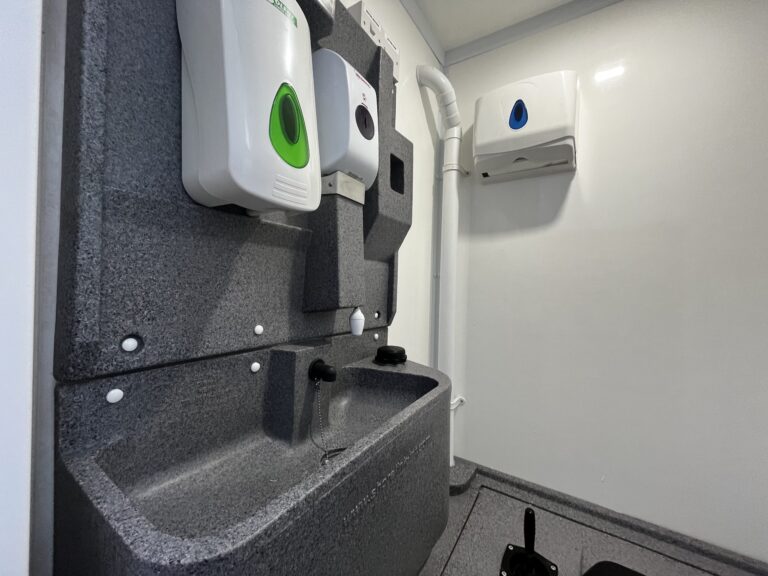
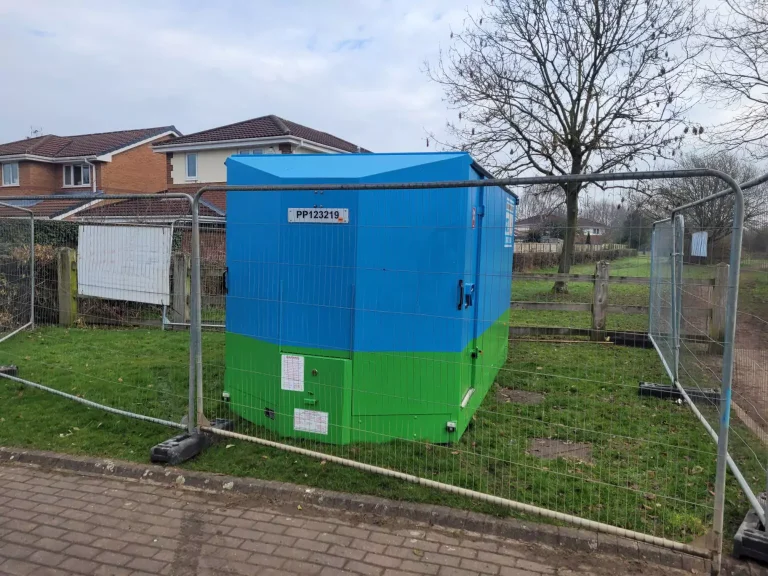
Two welfare units can look identical on the day they arrive. Same cabin, same toilet cubicle, same hot hand wash. Six weeks later one is still clean and the other has a crew walking to the garage down the road instead. The difference is not the unit. It is the welfare unit toilet servicing behind it, and that is the part most hire quotes never mention.
This post explains what a good service visit involves, why the design of the tanker matters more than most contractors realise, and the questions worth asking any supplier before you sign a hire agreement.
AT A GLANCE
✓ The welfare duty to keep toilets clean sits with the contractor in control of the site
✓ A full service deals with the waste tank, the flush tank and everything the crew touches
✓ Tankers that use one pump for sewage and fresh water put contaminated water into your flush tank
✓ Our six 4x4 tankers run separate fresh water tanks and pumps, crewed by our own PSE accredited team
✓ Ask any supplier who services the toilet, how the tanker is plumbed and how often it visits
A toilet that is not serviced properly is a compliance problem
Schedule 2 of CDM 2015 says sanitary conveniences on a construction site must be adequately ventilated and lit, and kept in a clean and orderly condition. The duty sits with the contractor in control of the site. If the toilet in your welfare unit is overflowing or out of chemical when an inspector turns up, you are the one in breach, however good the unit looked on delivery day.
We covered the full list of duties in our guide to HSE welfare requirements. The short version: a toilet that is clean on Monday and unusable by Thursday does not count as suitable and sufficient provision. Servicing is what keeps it compliant between visits.
Whoever owns the unit, a dirty site toilet is the site contractor's breach. Your supplier's servicing standard is your compliance standard.
What a proper service visit involves
The toilet in a Planet Power unit is a recirculating chemical toilet with a fresh water flush tank and a waste holding tank. A full service visit deals with both, plus everything the crew touches.
ON EVERY SERVICE VISIT
✓Waste tank emptied completely and rinsed, with the waste taken away on the tanker
✓Fresh flush water tank refilled and recharged with toilet chemical at the right dose
✓Bowl, seat, floor, walls and door handle cleaned and sanitised
✓Hand wash sink, soap, towel and toilet roll dispensers checked and restocked
✓Hot water, lighting and ventilation checked
✓Fuel level checked and topped up where fuel is included in the hire
✓Any fault logged and either fixed on the spot or passed to a field engineer
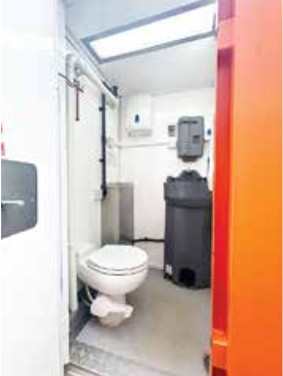
How often that visit happens has to match how hard the toilet is being used. Holding tank size makes a difference here: the 28 gallon tank on a Planet Power 8RD lasts a full crew a lot longer than the small tank in a basic single cubicle, so it is worth checking before you hire.
Separate pumps: the detail that decides whether servicing is hygienic
Here is the part of the job nobody sees. A service tanker has to do two things: suck sewage out of the waste tank and pump clean water into the flush tank. Plenty of tankers on the road do both with the same vacuum pump and the same pipework. The pump pulls waste out, gets flushed through, and then pushes fresh water into your toilet. However well it is rinsed between the two jobs, the water in your flush tank has been through a pump that was full of sewage a few minutes earlier.
Every one of our six tankers has separate fresh water tanks and separate pumps. The waste side and the fresh side never share a hose, a pump or a valve. We built the fleet this way on purpose and we will not run a shared pump arrangement on any of our units. If you ask a supplier how their tanker is plumbed and they cannot answer, that tells you something.
Want to see how our servicing compares?
Book a site visit and we will show you the tanker, the paperwork and a serviced unit.
Book a site visitCall 01942 316900What Portable Sanitation Europe accreditation means for you
Our servicing team is accredited by Portable Sanitation Europe, the trade body for the portable toilet and welfare servicing industry. In practice that means the person servicing your unit has been trained and assessed against the industry’s own standard for handling waste and chemicals, cleaning and recharging toilets, and moving waste safely. Nobody learns the job in a yard on a Friday afternoon.
Our tankers are Euro V and VI compliant, carry Chapter 8 decals for roadside working, and are run by our own servicing staff. The full picture is on our services page.
Why in house servicing beats a national supplier's subcontractor
A national hire company with one depot in the North West will often hand toilet servicing to a local contractor. The hire desk books it, the contractor fits it in. If the contractor is busy, your service slips a day. If the contractor runs a shared pump tanker, you get a shared pump service. The hire company rarely knows either way.
We run our own fleet of six 4×4 pickup mounted tankers out of Wigan, covering sites across Greater Manchester, Merseyside, Lancashire and Cheshire. The 4×4 matters more than it sounds: a tanker that can reach a unit on a muddy compound in January does not skip the visit. The team that delivers your unit, the team that services it and the engineer who turns up when something breaks all work for the same company and answer the same phone number.
If you are weighing a short hire against buying your own cabin, servicing is one of the costs that catches owners out. Our hire versus buying comparison puts it in the numbers.
Questions to ask before you hire
Whoever you hire from, these six questions separate the suppliers who take servicing seriously from the ones who treat it as an afterthought.
QUESTIONS TO ASK ANY SUPPLIER
✓Who services the toilet: your own staff or a subcontractor?
✓Does the tanker use separate pumps and tanks for fresh water and waste?
✓Is the servicing team accredited by Portable Sanitation Europe or an equivalent body?
✓What is the service schedule for a crew our size, and is it in the weekly rate?
✓How big is the waste holding tank on the unit you are quoting?
✓What happens if the toilet fails between visits, and how fast does an engineer get to us?

For mixed crews, add a seventh: can the unit be specified with separate male and female toilets? The Planet Power 10 Canteen Office has twin toilets for exactly this reason, and two toilets halve the load on each tank between services.
Clean toilets keep crews on site
The practical case for good servicing is simple. A crew that trusts the toilet uses it. A crew that does not will drive to the nearest garage or supermarket, and that time comes out of your programme. Through winter, when a warm, clean cubicle with hot hand wash is the one comfort on a wet site, it counts for even more. Our winter site welfare post goes through the rest of the cold weather list.
Every unit in our Planet Power range, from the compact Planet Power 6 to the new Canteen Office 14, comes with servicing by our own PSE accredited team on a separate pump tanker, delivered from Wigan to sites across the North West, usually within 24 hours.
See how our servicing standards compare
Book a site visit, or send us your site details for a hire quote that includes delivery, fuel and scheduled toilet servicing by our own team.
Book a site visitCall 01942 316900